This Article's Task: Verifying represent Accessory Fees on fashionreps
When viewing represent accessories on fashionreps, what you really need to verify isn't a prominent price on the product page, but the full cost before checkout: item amount, discounts, service fees, packaging fees, payment-related costs, international shipping, and any applicable taxes or destination-country customs costs. 🧾
This article is for buyers who have already found their target style, are ready to submit an order, but haven't yet confirmed the final amount due. After reading, you should be able to create a verifiable cost record and determine whether a discount actually applies to the current order. This article does not provide a lowest-price guarantee, nor does it replace the real-time amounts shown on the checkout page of your chosen shopping agent.

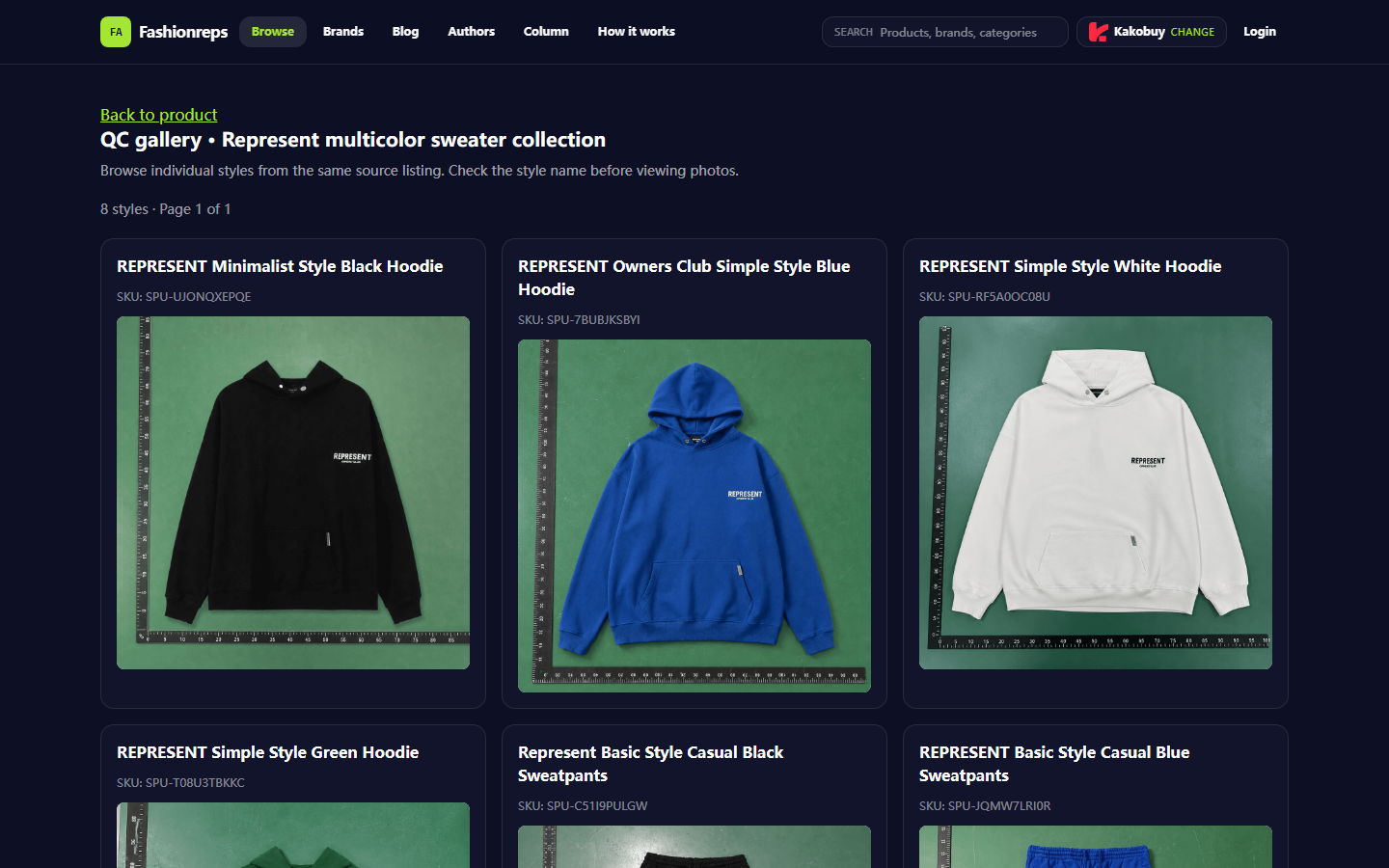
Image: Fashionreps page showing QC photos of Represent items.
Record Style, Specs, Visible Price, and Link from the fashionreps Product Page
First, establish the product identity, then record the costs. Represent accessories may differ in color, size, material, set composition, or seller version. Don't just save a page screenshot; also record:
- Product name and specific style
- Color, size, or specs
- Price shown on the page and currency
- Seller or source information on the product page
- Corresponding product page URL
- Time the page was displayed
- Any visible inventory, pre-order, or variant restrictions
- Whether QC photos, measurements, or other verifiable information is available
Product name, price, specs, and inventory are all subject to change. Before publishing or ordering, reopen the current page to confirm, and note the verification date in your records. If the page only shows a series name without a specific style, don't treat the series page price as the price for the target item.
Separately Verify Item Amount, Service Fees, Packaging Fees, Payment Fees, and International Shipping
Break down the total cost to see what the "discount" actually reduces. Use the following record format:
| Cost Item | What to Check Before Payment | Common Mistakes |
|---|---|---|
| Item Amount | Current style, specs, quantity, and currency | Mistaking series page or other variant prices for the target price |
| Discount Amount | Discount target, threshold, deduction method, and active status | Assuming a promo entry means it's already applied |
| Service Fees | Billing rules of your chosen shopping agent and applicable orders | Treating the product page price as the agent's final charge |
| Packaging Fees | Whether repackaging, reinforcement, or special handling adds costs | Overlooking added handling fees after combining packages |
| Payment-related Fees | Payment method, currency conversion, and additional fees shown | Comparing only item prices, not payment channel costs |
| International Shipping | Route, package weight, volumetric weight, and service type | Estimating with old orders or other countries' shipping |
| Taxes & Customs Costs | Destination rules, declaration info, and carrier requirements | Treating the agent's shipping fee as the total landed cost |
Don't mix amounts from different stages. The product page amount usually only reflects the item's visible price; agent service fees, packaging handling, international shipping, and potential destination-country costs should be based on current information from the relevant checkout stages. 💰
Check Discount Entry, Applicability, Thresholds, Exclusions, and Validity
When verifying a discount, first record the discount description, then observe whether the checkout page actually changes. Check the following:
- Whether the discount applies to item amount, service fees, international shipping, or only one of them
- Whether it requires a specific order amount, weight, route, or payment method
- Whether represent accessories are excluded or limited to specific sellers
- Whether it's only for new users, specific accounts, or designated campaigns
- Whether you need to manually claim it, enter a code, or select it at checkout
- Which time zone the validity period is based on
- Whether it can be combined with other discounts
- Whether the discount recalculates after cancellation, refund, order splitting, or repackaging
The discount page description doesn't mean the order has received the discount. Only when, under the current account, current item, current route, and current checkout conditions, the checkout page clearly shows a discount or fee change, can you list it as a verified item. If the discount entry opens but the checkout amount doesn't change, mark it as "to be confirmed" and don't calculate the savings yourself. 🔎
Standardize Currency, Exchange Rate Query Time, and Conversion Recording
When comparing options, first standardize the currency. For each conversion, record at least: original amount, original currency, target currency, exchange rate source, query time, and calculation result.
Don't directly compare the product page's instant price, the agent's checkout amount, and the final card charge, as they may use different exchange rates and include different conversion fees. If the platform or payment channel doesn't clearly publish the exchange rate, record "subject to the final amount on the checkout page or payment institution" rather than filling in a precise-looking but unverifiable estimate.
Use the same conversion time point within a single comparison. If prices, shipping, or discounts change during verification, keep the old record and recalculate; don't overwrite the original evidence. Exchange rate changes can also offset small discounts, so low-amount discounts shouldn't be stated as definite savings.
How to Confirm on the Checkout Page That a Discount Actually Applies, Not Just on the Description Page
Before checkout, review in this order:
- Confirm the cart still has the target represent style, specs, and quantity.
- Confirm the discount entry's conditions match the current order.
- Record each fee before applying the discount, not just the total.
- After applying, check if the checkout page lists the discount name, deducted amount, or adjusted fees.
- Ensure the discount isn't offset by increased other fees.
- Check if the route, packaging method, payment method, or destination info has changed.
- Save the checkout page record and use the final amount due as the comparison baseline for this option.
If the page requires login, agent selection, or destination input before showing fees, you can only record it as "verification incomplete." fashionreps pages guide the purchase process to your chosen external shopping agent; orders, payment, and international shipping are handled on the agent's page, so product page info cannot replace real-time verification on the agent's checkout page.
Checklist for Pending Items When Real-Time Fees or Discount Conditions Are Missing
If you encounter the following, don't write estimates as confirmed amounts:
- Product page lacks current price or currency
- Target style's specs and price can't be matched
- Service fee rules only shown after login
- Packaging fees only incurred after warehouse processing
- International shipping depends on actual or volumetric weight
- Discount lacks clear validity, threshold, or exclusions
- Discount entry works, but checkout page shows no deduction
- Destination taxes or customs requirements can't be determined in advance
- Page fails to load, redirects abnormally, or is empty
In these cases, confirm applicable conditions with your chosen shopping agent and wait for readable order details. Don't assume a lower item price means lower total cost; don't split orders, under-declare, or evade destination checks to get a discount. Compliant declaration and accurate order information are still important prerequisites before payment. 🛃
Represent Accessory Evidence Review and Next Steps Before Payment
Before paying, keep at least a concise record including product page, specs, item amount, discount conditions, service fees, packaging fees, payment fees, international shipping, currency, and conversion time. If any item lacks current evidence, mark it clearly as "to be confirmed" rather than filling it with old orders or others' experience.
Evaluating money-saving options should consider three things: how much cost is actually reduced, what risks are added, and whether it suits your order. Combining packages may reduce duplicate first-weight or some handling costs, but may also increase package value, volumetric weight, and single-loss risk; splitting packages may increase fixed fees but suit route restrictions, category restrictions, or risk diversification. Without current weight, route, and fee details, you can't guarantee which method is cheaper.
Better candidates for discounts or package combining are buyers who have confirmed the item identity, can see current checkout details, and are willing to declare accurately according to destination rules. Not recommended if discount conditions are unclear, checkout amount hasn't actually changed, shipping depends on unknown actual measurements, or you're saving a small amount but taking unacceptable package consolidation risk.
Next, verify item by item on your chosen shopping agent's checkout page and save the final details before payment. Only proceed with payment when item, fees, discount, route, and destination conditions all match.